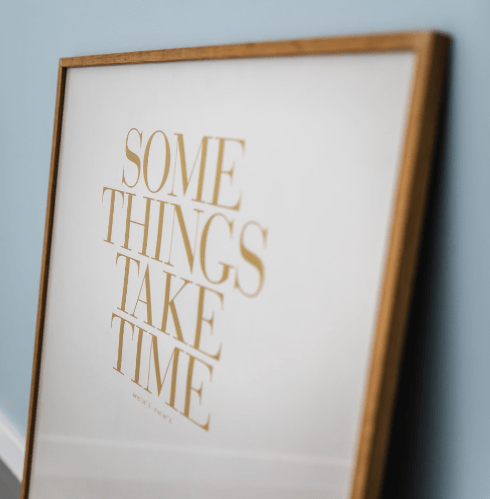
At its root, impatience is confusion about control.
It’s easy to be patient when we know the timeline and, more importantly, have some influence over it. We can enjoy the anticipation. We can use the wait time productively and creatively. There’s a predictable journey, and we have the map. Even when we’re not fully aware of every stop and stumble along the way, we know the direction and the destination.
Our anticipation morphs into anxiety when uncertainty creeps in, because uncertainty means we’re not in control. We don’t have the details, and what details we see might not be what we’d choose. Our confusion increases, and we get disoriented. The route doesn’t look as we expected. Perhaps we think we’re on the right road, but we knew what it should look like in the brilliance of summer yet find ourselves in the dreariness of winter and it’s disheartening. We want to get through it quickly instead of savor the journey.
We want to fast forward. Or sometimes, we want to go back. Impatience isn’t simply wanting for the future to come faster; it’s wanting something different. It’s a desire for change—quick change. And it’s usually based in our own comfort or understanding. We want the control to get out of and into the situations we think will be so much better than where we are.
The control isn’t ours to take and manage. That’s not to say we don’t have an impact on the journey; we most certainly do. We’re not off the hook. We have responsibilities every moment along the way. We decide how we respond, prepare, rest, pursue, problem-solve. We engage, or we retreat. We recognize we don’t have control but neither are we passive.
Patience is not indifference. It’s a pursuit. Patience is not a reclined position but an intentional lean, being sensitive enough to notice the opportunities to accelerate, as well as the opportunities to appreciate the moments right where we are with the people around us.
Patience is a beautiful dialogue of faith.
Podcast: Play in new window | Download