I’ve watched the wall of rain move across the field toward me when I was growing up on the farm.
I’ve seen looming, dark clouds in front of me as I’ve driven.
I’ve watched the lightning in the clouds below me as I’ve flown in planes.
There are many possible perspectives of storms.
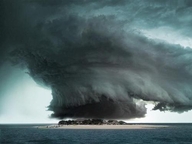
Typically, I appreciate the beauty more when I know I’m out of the storm’s way. I respect storms more than I fear them, but I have to admit there is more anxiety when I know I’m about to enter a storm and more appreciative once I’ve come through one. And when I’m in the middle of it? Well, it depends.
Living in central Illinois, there have been many times I’ve retreated to the basement because of tornado warnings. When a major storm hit while I was driving toward my parents’ house, I didn’t realize the severity until a large tree limb flew through the air across my path, narrowly missing my vehicle.
Perhaps the scariest storms have been those I’ve encountered where I’m less familiar with my surroundings. The sky looks different, the storm moves in unexpected directions, and I’m not sure of my options.
Yet once the storm passes, there’s a sigh of relief. There’s sometimes a rainbow of celebration. There’s gratitude for survival, nourishing rain, limited damage. The after-the-storm experience differs from the during-the-storm experience, which differs from the before-the-storm experience.
How have you experienced stages of storms in your life?
A friend recently asked for my advice about a situation, and when I told her she needed to be honest in a relationship, she responded with apprehension – even fear – of what might happen as a result. Her mind flew through “what ifs.” She transformed the possibility of a storm into a pending storm warning of epic proportions. I couldn’t assure her the worst case scenario wouldn’t happen. All I could do is agree it was one possibility but that there were others as well. I shared that the storm usually looks worse when we’re looking at it looming on the horizon. But storms don’t always respond the way we expect. Sometimes they intensify, but often times, they weaken or change direction.
The point wasn’t “what if.” She had no control over the what it. She had control over what is and what should be. The storm wasn’t the issue. It was distracting her. The issue was her relationship.
What storm are you anticipating right now?
Is it distracting you from the real issue?
What is your current “what is” and “what should be,” and how will you respond?
When you’re in the middle of the storm, your perspective is again clouded, perhaps completely blocked. You might become disoriented. You might need to retreat to a safe place through the crisis, or you might need to risk danger in order to help someone or to get to a better place.
Once the storm passes, your perspective might become distorted again. Sunlight is blinding. You might be so distracted by the brightness of what’s going on around you that you neglect to take care of storm clean-up or preparation.
There is always a storm somewhere around you. It might be looming, or you might be in the middle of it. A storm might have just passed. In most cases, more than one will be true at the same time.
How you see the storm uses your limited perspective. Widen your view. God sees all the storms at once and sees your life, relationships, and growth with a majestic wide-angle lens. Consider the context of your storms. You won’t be able to fully experience God’s perspective, but you can at least respect that your view is limited and God’s not.
You can trust that God knows where the storm is.
The storm comes from where it was stored; the cold comes with the strong winds. (Job 37:9)